
Implementasi Green Accounting pada UMKM: Dampak terhadap Keberlanjutan dan Efisiensi Operasional
Article Sidebar
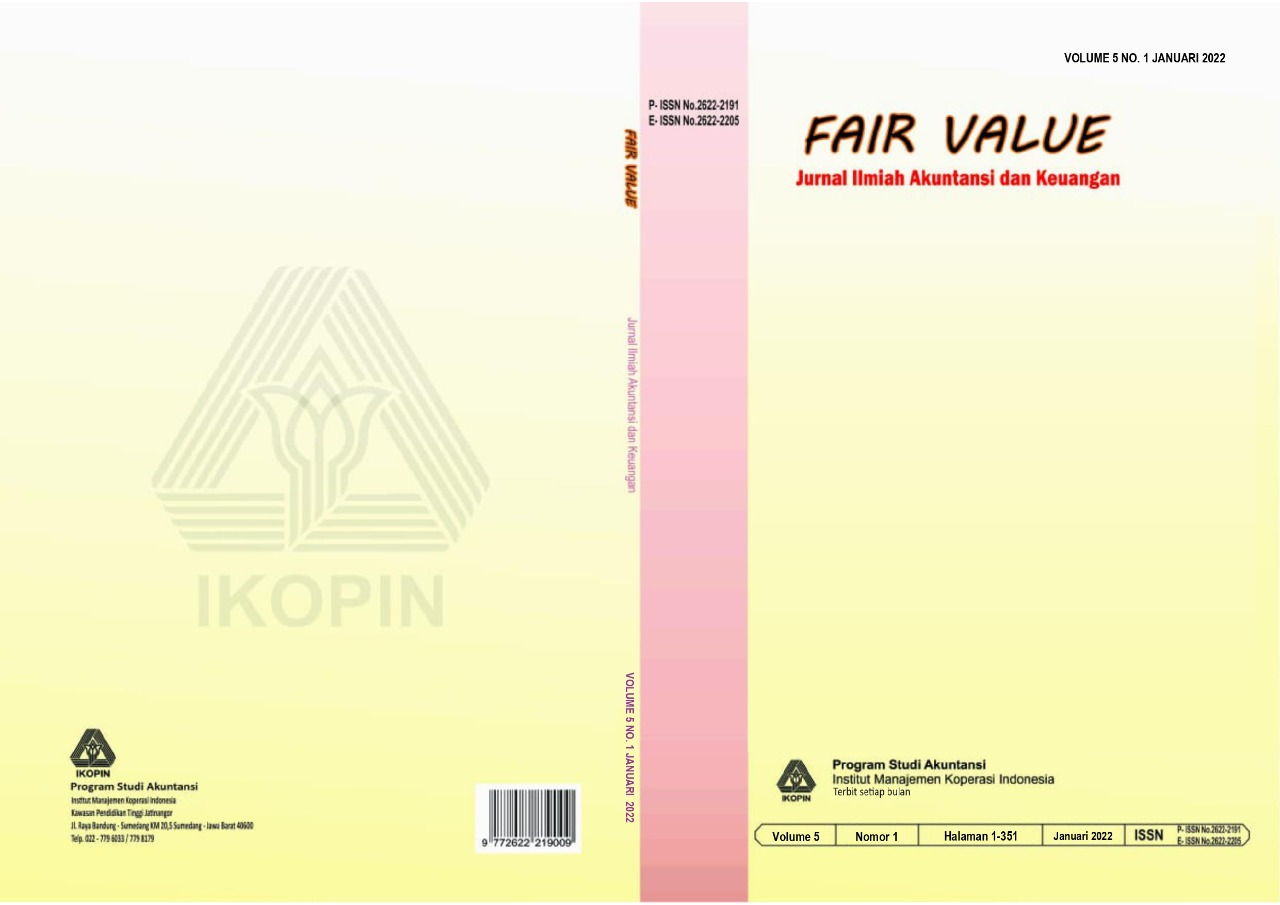
Main Article Content
Abstract
This study explores the implementation of Green Accounting in Micro, Small, and Medium Enterprises (MSMEs) in Indonesia, focusing on its impact on environmental sustainability and operational efficiency. Through a systematic literature review, the study analyzes various research related to Green Accounting, sustainable practices in MSMEs, and adoption challenges in developing countries. Findings indicate that Green Accounting enhances MSMEs' financial and environmental performance by reducing environmental costs, fostering green innovation, and improving supply chain collaboration. However, barriers such as limited resources and lack of awareness remain significant challenges. The study concludes that adopting Green Accounting requires government policy support and training for MSMEs, recommending integration with green supply chain management to achieve better operational efficiency
Article Details
Section

This work is licensed under a Creative Commons Attribution-NonCommercial 4.0 International License.
How to Cite
References
Afolabi, H., Ram, R., Hussainey, K., Nandy, M., & Lodh, S. (2023). Exploration of small and medium entities' actions on sustainability practices and their implications for a greener economy. Journal of Applied Accounting Research, 24(5), 655-675. https://doi.org/10.1108/jaar-09-2022-0252
Anisyah, N. (2024). MSMEs Upgrade with The Concept of Green Accounting and Digitalization: Study Literature Review. JIMU: Jurnal Ilmiah Multidisipliner, 3(2), 45–58.
Arjuna, B. J. P. A., & Giovania, G. (2024). Penerapan Green Accounting sebagai Strategi Pelaporan Keuangan Ramah Lingkungan bagi UMKM di Distrik Abepura, Kota Jayapura. RECORD: Journal of Loyalty, 7(1), 112–123.
Asiaei, K., Bontis, N., Alizadeh, R., & Yaghoubi, M. (2022). Green intellectual capital and environmental management accounting: Natural resource orchestration in favor of environmental performance. Business Strategy and the Environment, 31(1), 76-93. https://doi.org/10.1002/bse.2875
Bartolacci, F., Caputo, A., & Soverchia, M. (2020). Sustainability and financial performance of small and medium sized enterprises: A bibliometric and systematic literature review. Business Strategy and the Environment, 29(3), 1297-1309. https://doi.org/10.1002/bse.2434
Burritt, R. L. (2004). Environmental management accounting: Roadblocks on the way to the green and pleasant land. Business Strategy and the Environment, 13(1), 13-32. https://doi.org/10.1002/bse.379
Celestin, M., & Vanitha, N. (2020). Eco-friendly accounting: How going green boosts your bottom line. Global Web Conference on Multidisciplinary Research, 1-12. https://www.researchgate.net/profile/Prof-Celestin/publication/385916593_ECO-FRIENDLY_ACCOUNTING_HOW_GOING_GREEN_BOOSTS_YOUR_BOTTOM_LINE/links/673bea4ba8173d223c0a7459/ECO-FRIENDLY-ACCOUNTING-HOW-GOING-GREEN-BOOSTS-YOUR-BOTTOM-LINE.pdf
Cordano, M., Marshall, R. S., & Silverman, M. (2010). How do small and medium enterprises go “green”? A study of environmental management programs in the US wine industry. Journal of Business Ethics, 92(3), 463-478. https://doi.org/10.1007/s10551-009-0168-z
Chamalinda, K. N. L., Kusufi, M. S., & Sari, S. S. (2024). Exploring concerns in the implementation of Green Accounting: A case study on MSMEs Batik Business. BIO Web of Conferences, 12(5), 155–163.
Crossley, R. M., Elmagrhi, M. H., & Ntim, C. G. (2021). Sustainability and legitimacy theory: The case of sustainable social and environmental practices of small and medium-sized enterprises. Business Strategy and the Environment, 30(8), 3740-3762. https://doi.org/10.1002/bse.2837
Dwitasari, A., & Sisdianto, E. (2025). Efisiensi ekonomi dan lingkungan melalui implementasi Green Accounting di UMKM Keripik Pisang Lampung. Jurnal Ilmiah Ekonomi dan Bisnis, 14(2), 87–99.
Galib, A., Wulandari, F. A., & Ariyandani, N. (2024). Behavioral Aspects Approaches in Encouraging Green Accounting Practices for MSMEs In West Sulawesi: Spirituality and Kalindaqdaq Perspective. Economics and Business Journal (ECBIS), 2(1), 1-15. https://ecbis.net/index.php/go/article/view/156
Gunningham, N. (2002). Regulating small and medium sized enterprises. Journal of Environmental Law, 14(1), 3-32. https://heinonline.org/hol-cgi-bin/get_pdf.cgi?handle=hein.journals/jenv14§ion=6
Indriastuti, M., & Mutamimah. (2023). Green Accounting and sustainable performance of micro, small, and medium enterprises: The role of financial performance as mediation. Indonesian Journal of Accounting Research, 26(1), 1-26. https://doi.org/10.33369/ijar.26.1.1-26
Kusumawardhany, S. I. (2022). Strategi Green Accounting sebagai bagian penerapan etika bisnis pada UMKM. Jurnal Akuntansi dan Bisnis, 12(2), 88–97.
Manh, P. D. H. D. (2024). Promoting the application of Green Accounting in the context of sustainable development at enterprises in Vietnam. Global Scientific and Academic Research Journal of Economics, Business and Management, 5(1), 1-10. https://gsarpublishers.com/wp-content/uploads/2024/04/GSARJEBM512024-FT-Gelary-script.pdf
Moorthy, K., & Yacob, P. (2013). Green Accounting: Cost measures. Open Journal of Accounting, 2(1), 4-7. https://www.researchgate.net/profile/Abdulnaser-Nour-2/post/Could-you-suggest-some-literature-on-environmental-accounting/attachment/59d63e26c49f478072ea8e97/AS%3A273766796464129%401442282498333/download/%D8%A7%D9%84%D9%85%D8%AD%D8%A7%D8%B3%D8%A8%D8%A9+%D8%A7%D9%84%D8%AE%D8%B6%D8%B1%D8%A7%D8%A1+%D9%85%D8%AF%D8%AE%D9%84+%D8%A7%D9%84%D8%AA%D9%83%D9%84%D9%81%D8%A9.pdf
Mubarokah, A. K. (2024). Peran Green Accounting dalam mewujudkan prinsip pembangunan berkelanjutan pada UMKM Bakpia Maharani Trenggalek. Jurnal Akuntansi dan Keuangan, 15(1), 55–67.
Nigri, G., & Del Baldo, M. (2018). Sustainability reporting and performance measurement systems: How do small- and medium-sized benefit corporations manage integration? Sustainability, 10(12), 4499. https://doi.org/10.3390/su10124499
Raharjo, K. (2019). The role of green management in creating sustainability performance on the small and medium enterprises. Management of Environmental Quality: An International Journal, 30(3), 557-577. https://doi.org/10.1108/MEQ-03-2018-0053
Rasyid, S., Azis, N. A., & Rahmat, A. (2025). Green Accounting for Medium-Sized Enterprises: A Review of Participatory Action Research Towards A Sustainable Future. International Journal of Multidisciplinary Research, 1-15. https://search.proquest.com/openview/d5df17e6e78c742f134737835a259d04/1?pq-origsite=gscholar&cbl=816338&casa_token=0b6BH19p1MMAAAAA:H23P907gl-UgaPQdb3zY_VN5SUOoABCOVcFgHVEBmjG_TiBdT2r7U75_j_XQ9YV62UaIptIppvM
Tjahjadi, B., Agastya, I. B. G. A., Soewarno, N., & Putra, A. (2023). Green human capital readiness and business performance: do green market orientation and green supply chain management matter? Benchmarking: An International Journal, 30(2), 408-427. https://doi.org/10.1108/bij-10-2021-0622
Tripalupi, R. I., Rusmariani, Y., & Dzikrayah, F. (2025). Comparative analysis of environmental cost accounting implementation in micro, small and medium enterprises. International Journal of Economics and Business Research, 19(3), 245–259.
Tu, J. C., & Huang, H. S. (2015). Analysis on the relationship between Green Accounting and green design for enterprises. Sustainability, 7(5), 6264-6277. https://doi.org/10.3390/su7056264
Vásquez, J., Aguirre, S., Fuquene-Retamoso, C. E., & Bruno, G. (2019). A conceptual framework for the eco-efficiency assessment of small- and medium-sized enterprises. Journal of Cleaner Production, 237, 117660. https://doi.org/10.1016/j.jclepro.2019.117660
World Bank. (2022). SMEs and environmental sustainability in developing countries. Washington, DC: World Bank Group.
Younis, H., & Sundarakani, B. (2020). The impact of firm size, firm age and environmental management certification on the relationship between green supply chain practices and corporate performance. Benchmarking: An International Journal, 27(1), 319-346. https://doi.org/10.1108/BIJ-11-2018-0363